 LoveDesignBuildRepeat
Boutique hotel on the waterfront of Como lake
Location: Como, Italy. GFA: 800 sqm.
Architectural concept
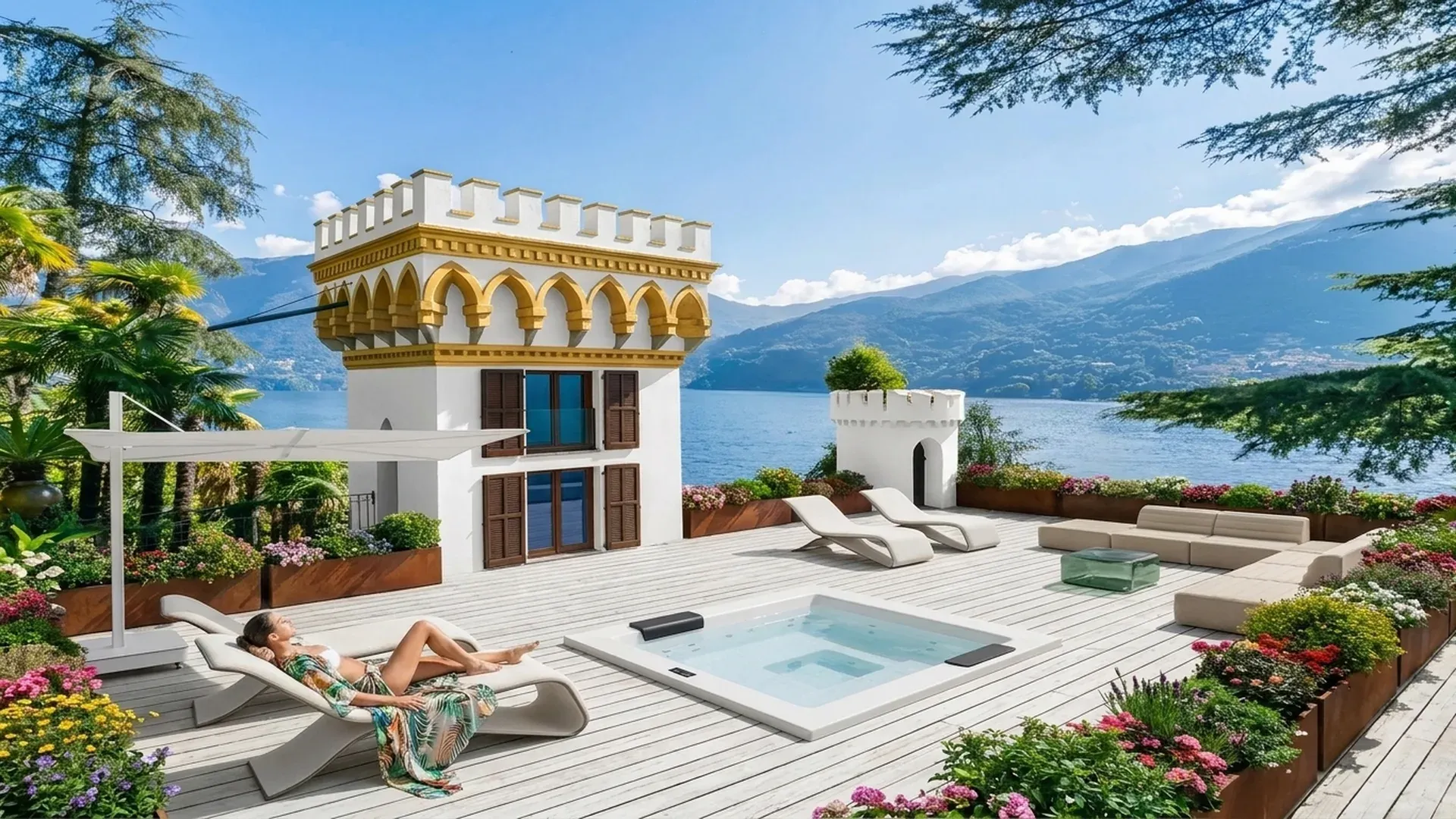
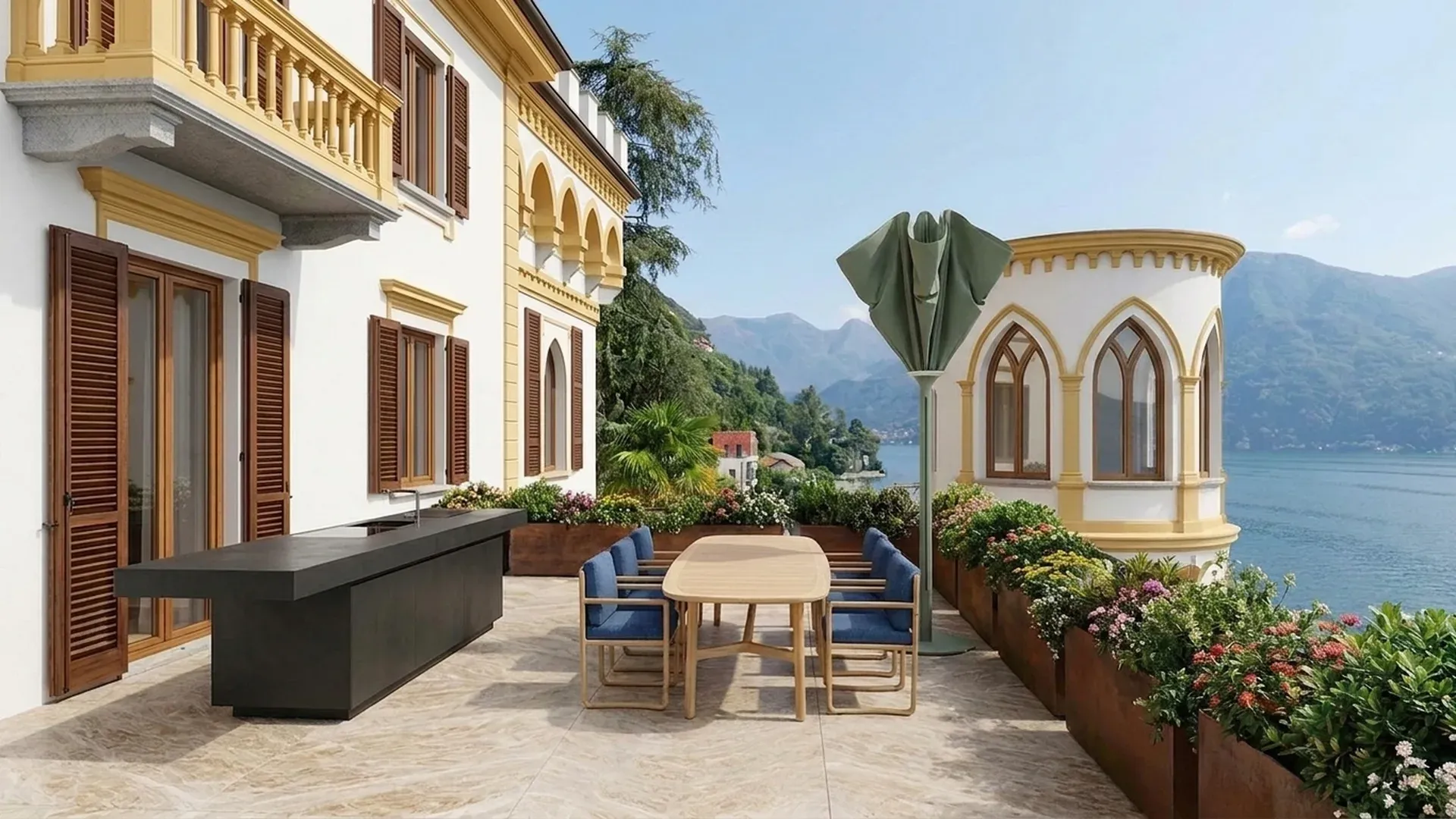
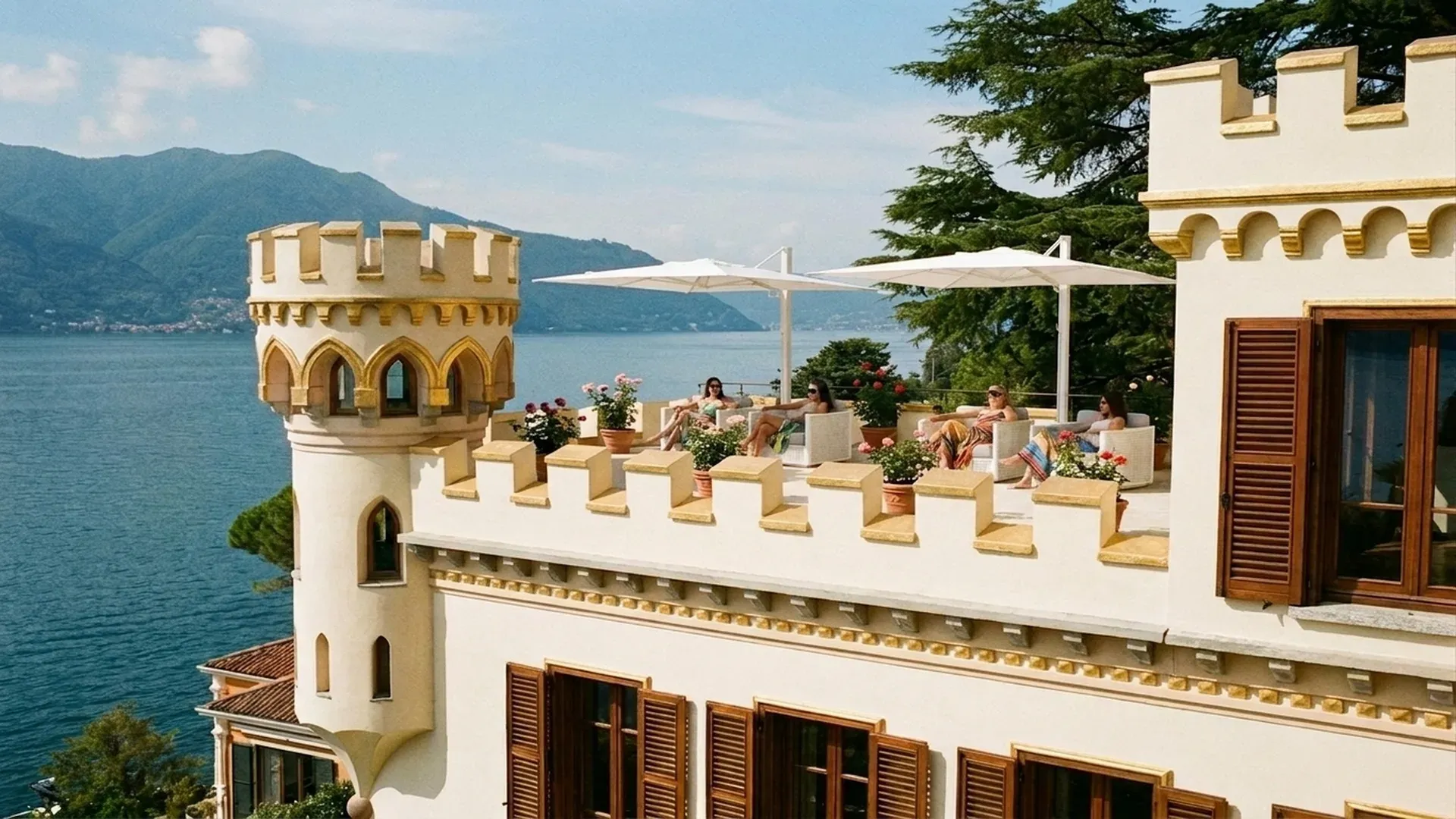
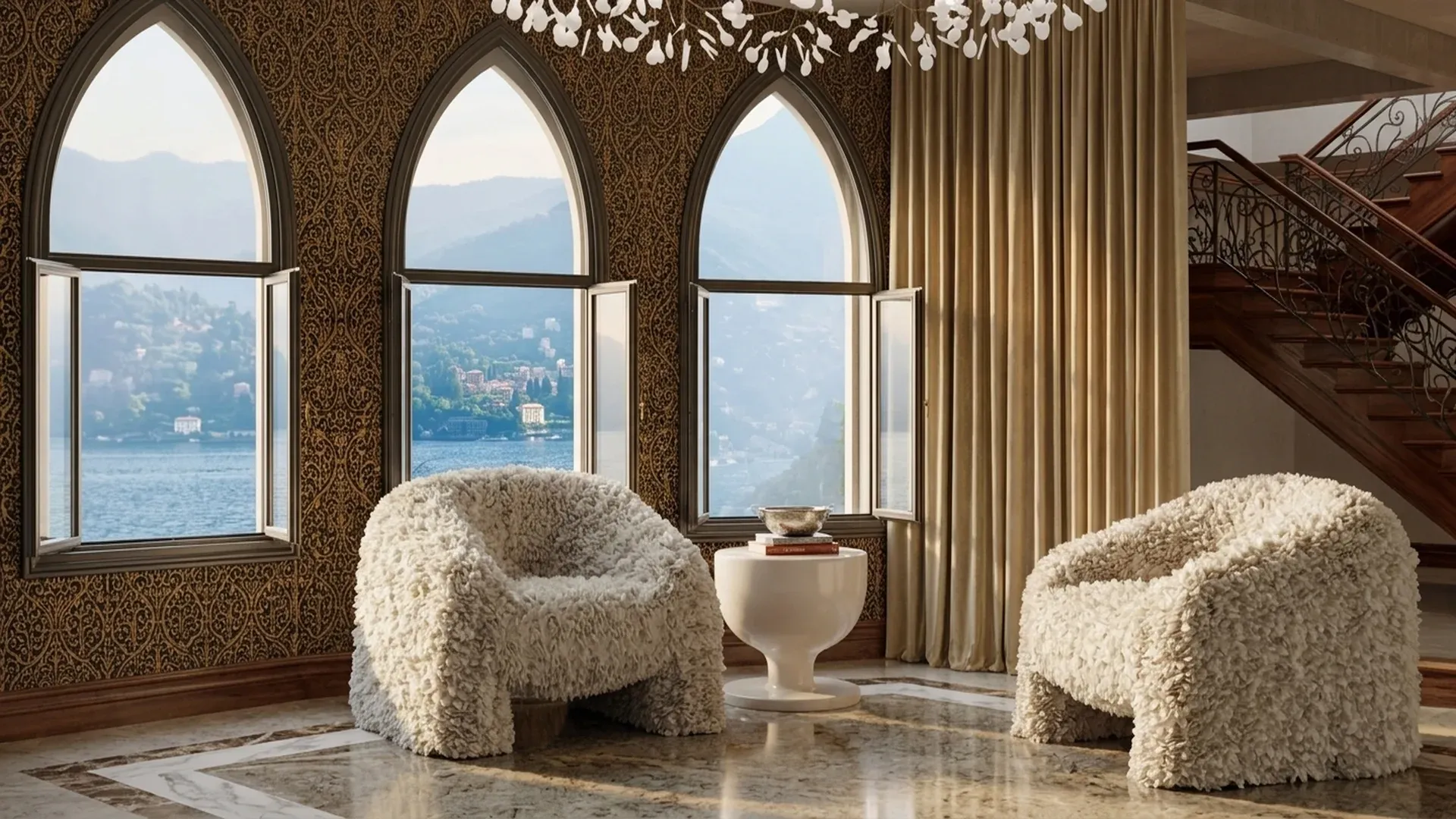
On the protected waterfront of Lake Como, where the Soprintendenza watches over every stone and shutter, our studio was invited to reimagine a historic lakeside villa as a boutique hotel of rare intimacy - a place where the water does not merely frame the view but enters the atmosphere of every room. The existing structure, with its Gothic-arched pavilion tower and neoclassical facade of yellow render and chestnut-shuttered windows, set the terms of engagement. We accepted them fully, treating heritage not as constraint but as the most luxurious material available.
Spatial organisation
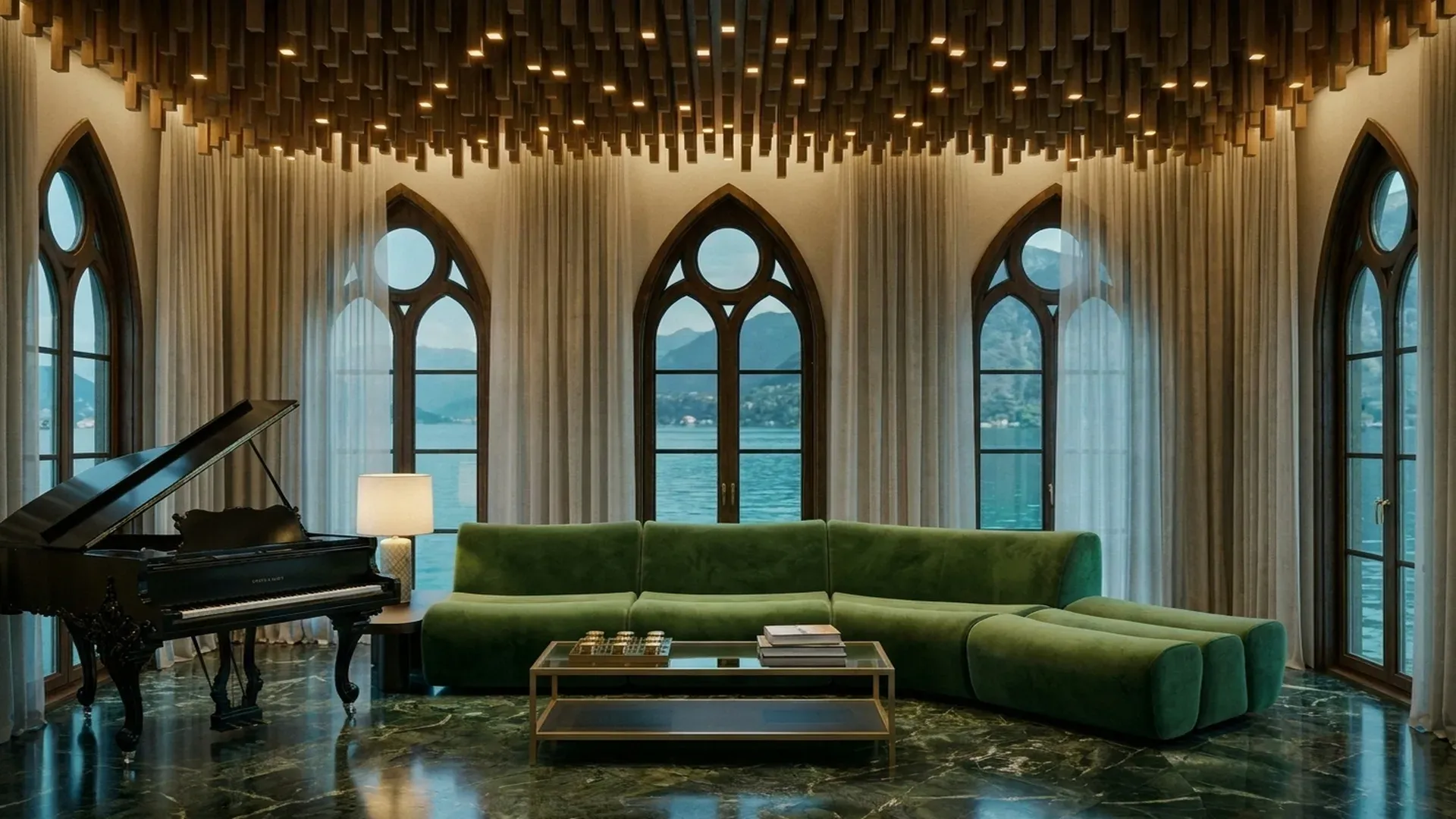
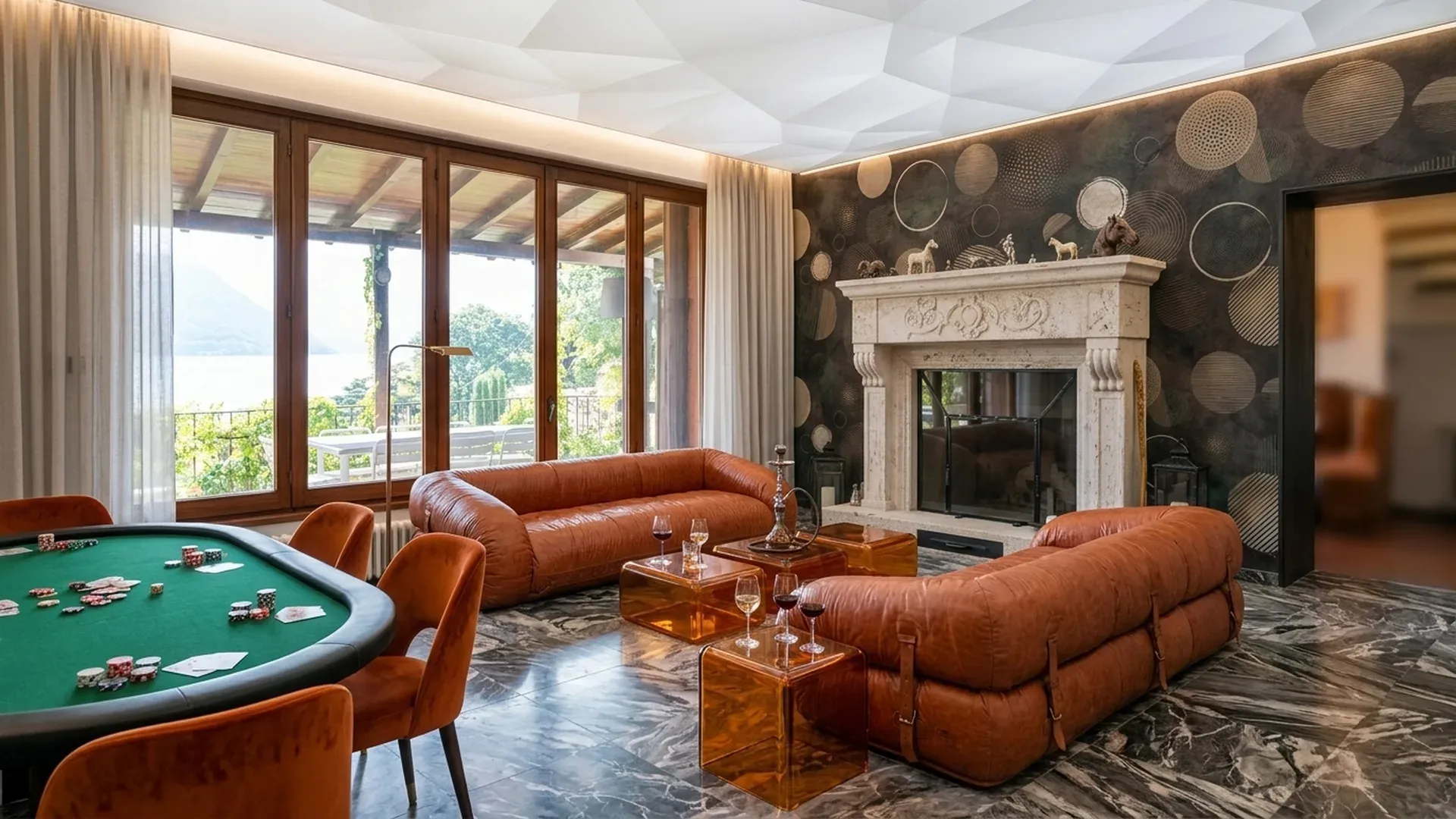
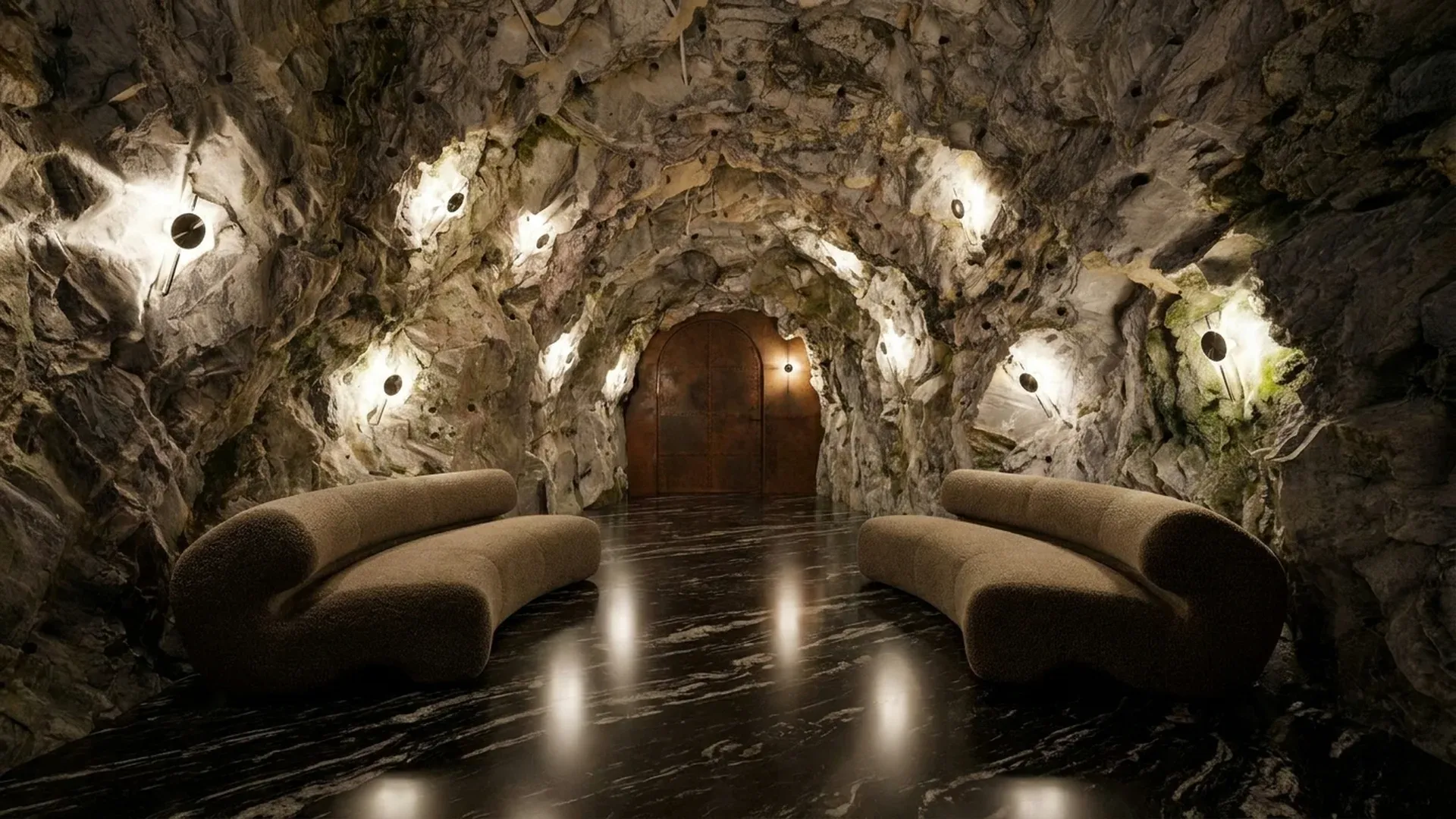
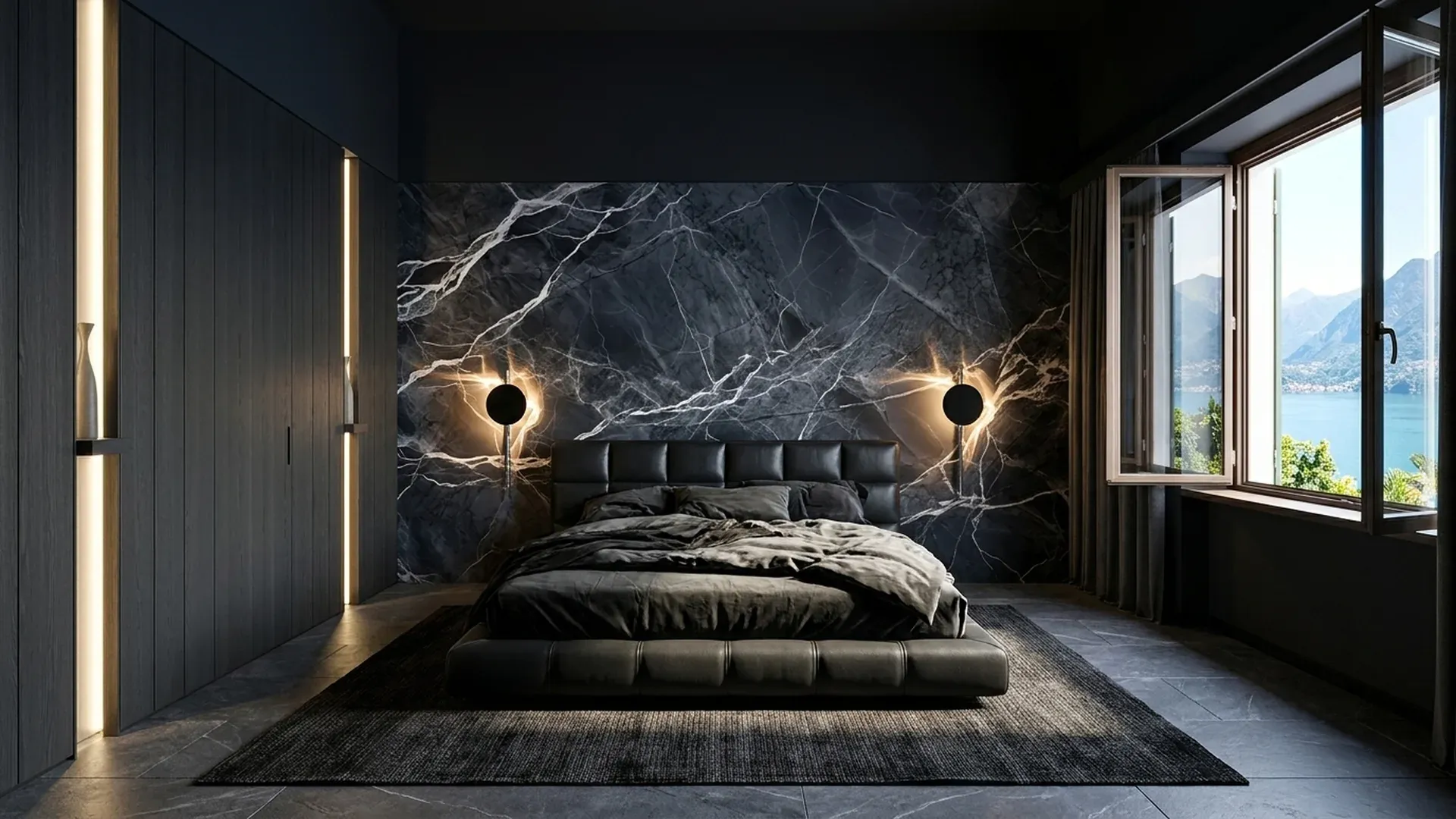
The 800 sqm programme is distributed across the villa's principal floors, with each level calibrated to a distinct emotional register - arrival and gathering below, repose and contemplation above. The salon, anchored by Gothic lancet windows that frame the lake and the Alpine ridgeline beyond, receives a grand piano and a deep sectional sofa in forest-green velvet: a room for music and silence in equal measure. The games room - its ceiling faceted like cut crystal, its walls dressed in dark patterned wallcovering - offers a more intimate drama, with cognac leather sofas arranged around an antique marble fireplace and a poker table at the lake-view window. The master suite is conceived as a nocturnal sanctuary: a low platform bed in quilted leather faces a full wall of black Marquina marble, its white veining caught by a pair of spherical wall sconces that cast warm halos against the stone.
Materials and climate
terrazzo veneziano
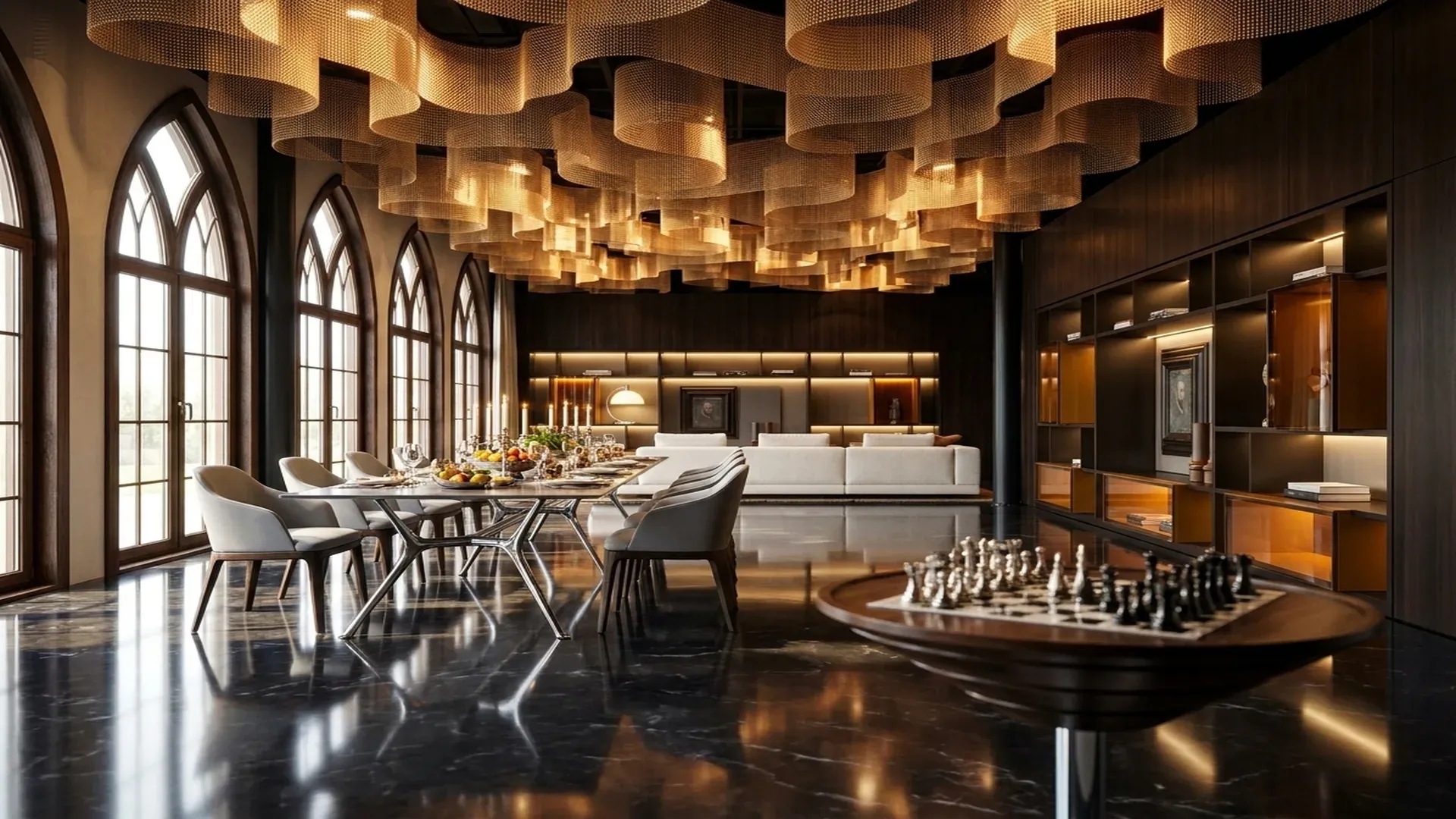
Our studio sourced materials from within the Lombardy and Veneto supply chain wherever the brief allowed. The principal floor surfaces are terrazzo veneziano, polished to a mirror finish that doubles the reflections of water and sky. Stair treads and fireplace surrounds are carved from Botticino marble, its warm cream tone softening the drama of darker finishes throughout. Bedroom floors receive underfloor hydronic heating beneath large-format stone tile, essential in a climate where winter temperatures settle between 0 and 5 degrees Celsius for five to six months and radiant warmth at floor level is not a luxury but a physiological necessity. Como silk - woven locally within thirty kilometres of the site - appears as wall panels and drapery, its lustre contributing a tactile refinement that no imported textile could replicate.
Style
An Italian Heritage Restoration held to Soprintendenza-grade standard on the Lake Como waterfront. The neoclassical villa's loggias, terrazzo floors, and plasterwork are preserved and revealed under the Vincolo Paesaggistico, the palette muted and period-appropriate. Modern insertions are deliberately contemporary — the services, the bathrooms, the discreet technical systems — set against the villa's fabric without apology, so a visitor can read at a glance what is nineteenth-century and what is new. Nothing original is lost to fashion, and nothing new pretends to have been there all along.
Bioclimatic strategy
solar shading louvres
The humid subtropical-continental climate of the lake basin - warm and humid from June through September, cold and damp from November through March - demanded a dual-season logic. South and west facades are shaded by deep terrace overhangs and operable timber solar shading louvres, calibrated to block the high summer sun while admitting the low winter angle fully into the interior. Thermal mass is provided by the marble floors and the original masonry walls, which absorb midday heat and release it through the evening hours. Natural cross-ventilation is channelled through the Gothic window openings on the lake elevation and corresponding courtyard openings to the rear, reducing mechanical cooling loads across the six warmest months.
Energy and sustainability
The project was structured to access the Italian Ecobonus incentive framework at the 65 percent tier, directing investment into a high-efficiency ground-source heat pump coupled with the underfloor hydronic distribution network. The building envelope was upgraded with internal insulation - chosen over external in deference to the protected facade - achieving thermal transmittance values compliant with the Lombardy regional energy code. Photovoltaic panels are integrated into the flat roof of the service wing, discreetly positioned below the historic parapet line and invisible from the lake elevation.
Landscape
Corten steel planters
The terraces are the hotel's true public rooms - stone-paved platforms cantilevered above the water, planted with Italian cypress, Camellia japonica, plumbago, and Rosa banksiae in raised Corten steel planters that develop a rust patina complementary to the villa's warm ochre render. The rooftop terrace, centred on a flush lap pool with overflow edge, extends the outdoor hospitality season from April through October, its timber deck and white loungers oriented to capture both the morning light from the eastern shore and the alpenglow that colours the mountains at dusk. An outdoor kitchen counter in dark sintered stone allows the terrace to function as a dining destination independent of the interior.
Closing thought
Our studio believes that in a setting of this magnitude - Alpine light, silk-grey water, centuries of refined habitation - the architect's role is to listen before drawing. Every material we specified, every thermal detail we resolved, every silk panel we placed was guided by a single ambition: that guests arriving by boat across the lake should feel, before they have crossed the threshold, that something exceptional awaits them. Luxury, in the end, is expressed in proportion and silence.
Заинтересовал похожий проект?
Давайте обсудим ваше видение и создадим что-то выдающееся вместе.
Связаться с нами