 LoveDesignBuildRepeat
Seaside villa in Costa Brava
Location: Costa Brava, Spain. GFA: 600 sqm.
Architectural concept
Costa Brava vernacular
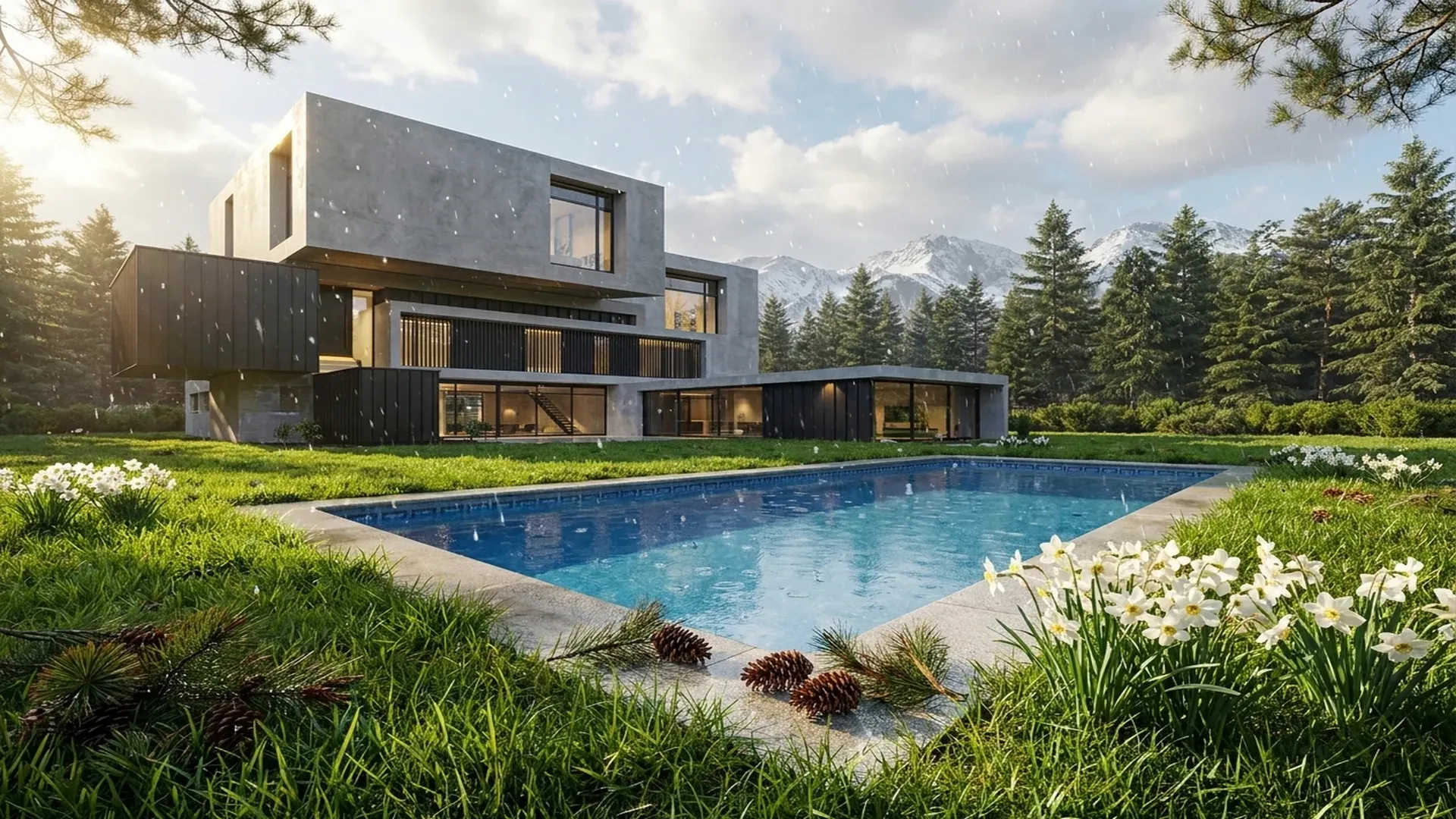
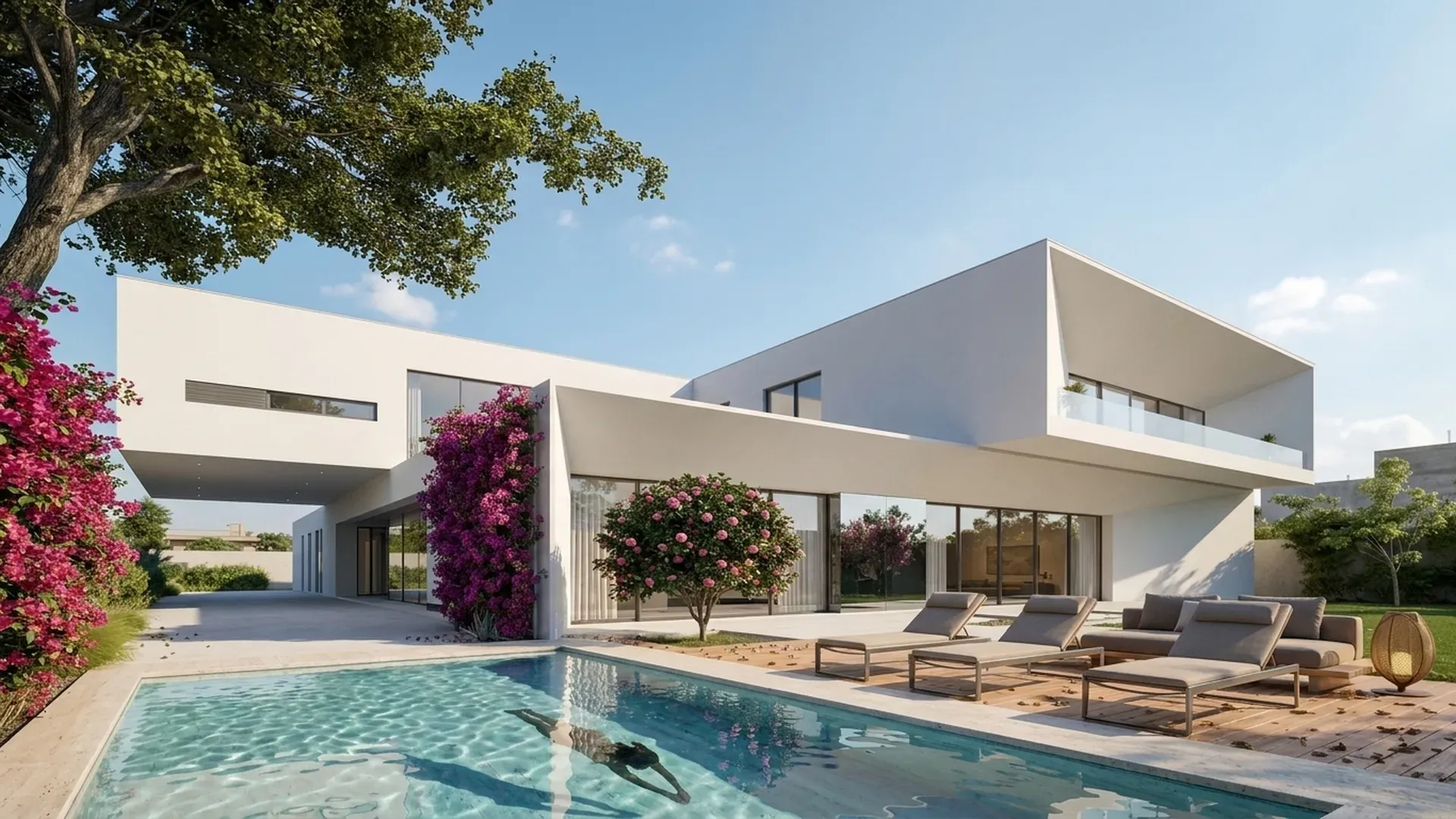
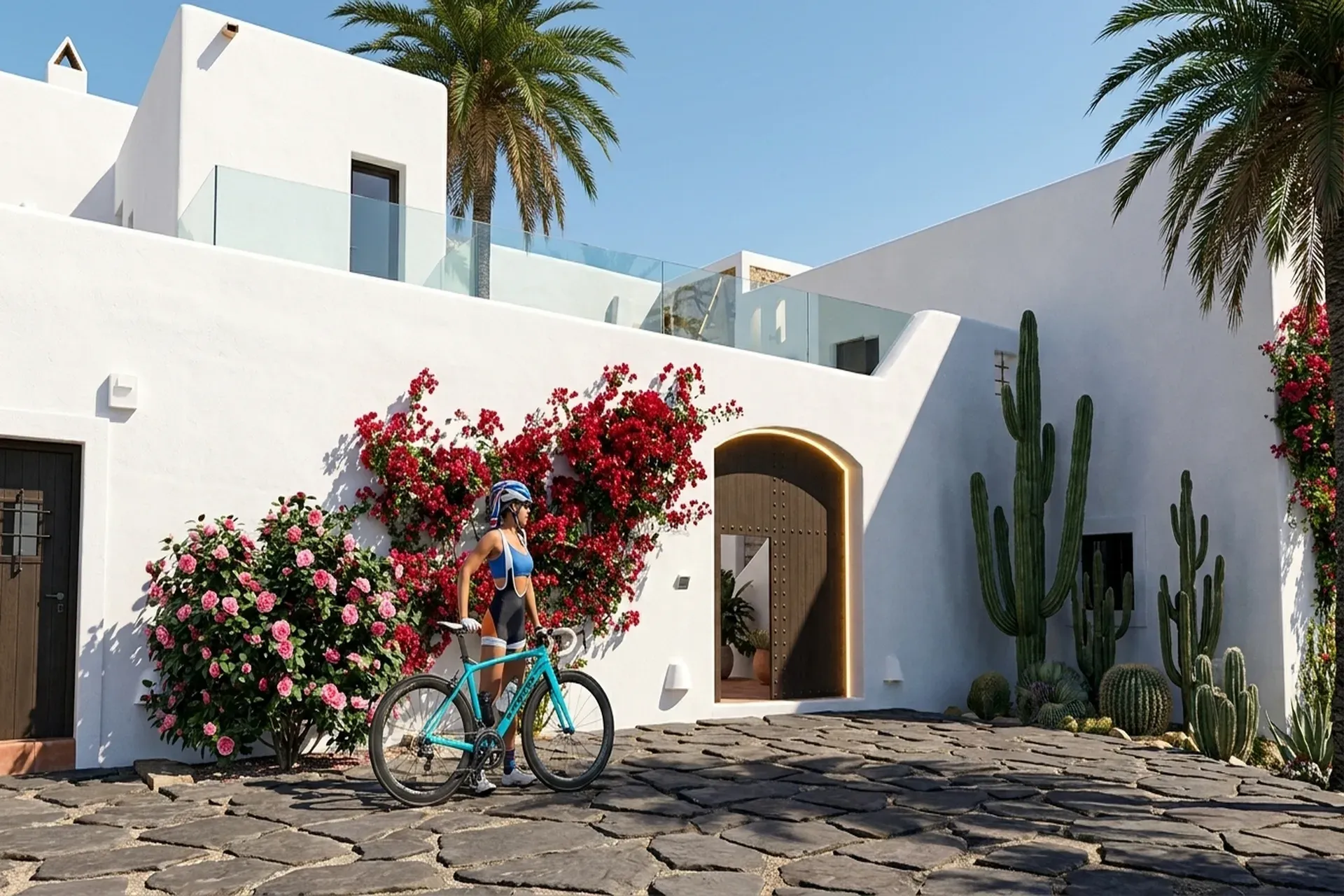
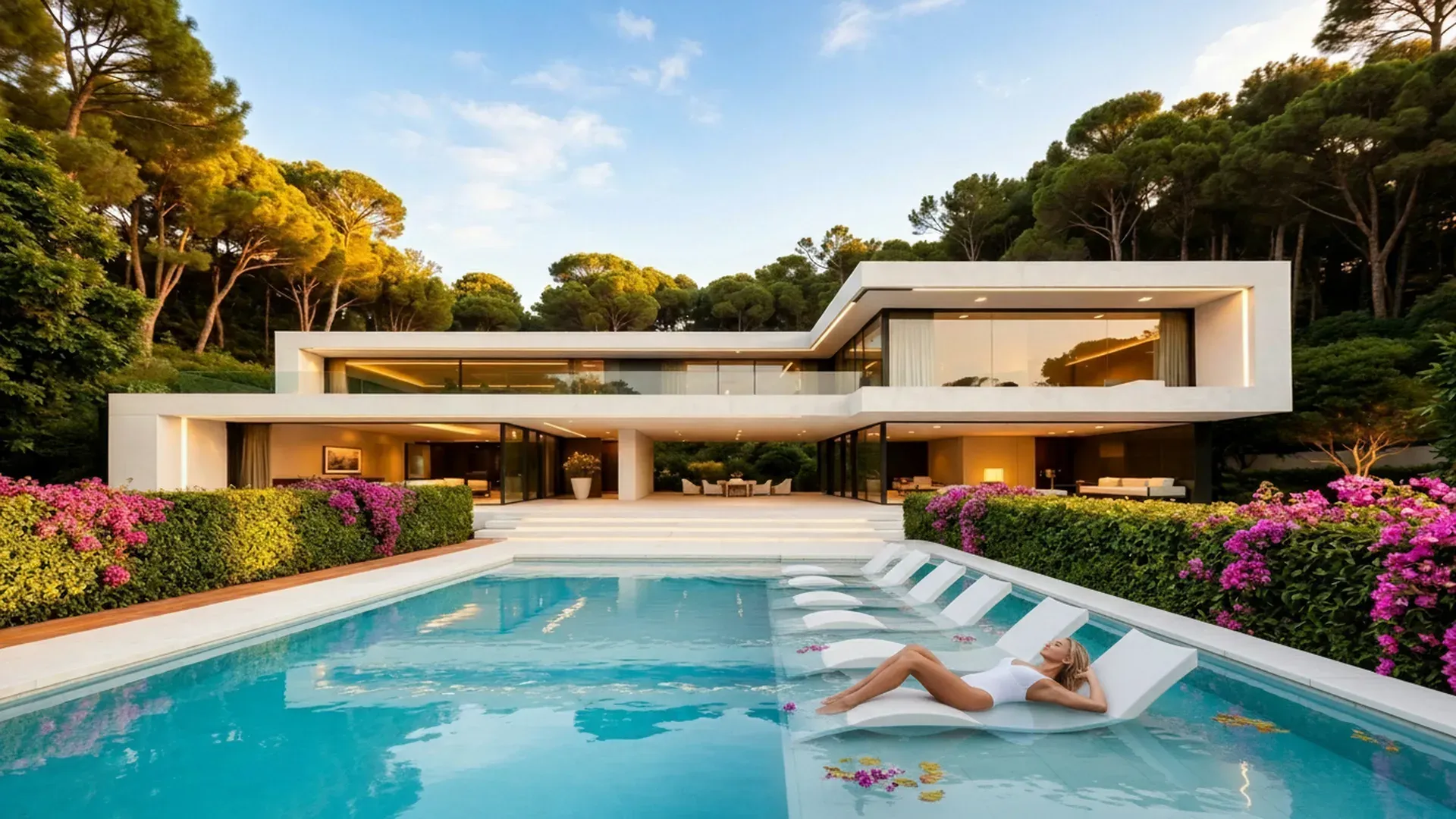
The Costa Brava has always rewarded those who listen to its landscape - the salt-scented pine forests descending toward a luminous sea, the limestone cliffs catching the last gold of the afternoon. Our studio was invited to reimagine a generous 600 sqm residence set on a plot exceeding 3,300 sqm, oriented due south with uninterrupted views across the Mediterranean. The brief was both precise and deeply human: to create a home that breathes with the coast, that allows a family to live outdoors for seven months of the year without ever feeling the architecture as an obstacle between them and the horizon. The result is a composition of horizontal white volumes - clean, confident, deliberately low against the treeline - that takes its proportions from the Costa Brava vernacular, yet speaks a fully contemporary language.
Spatial organisation
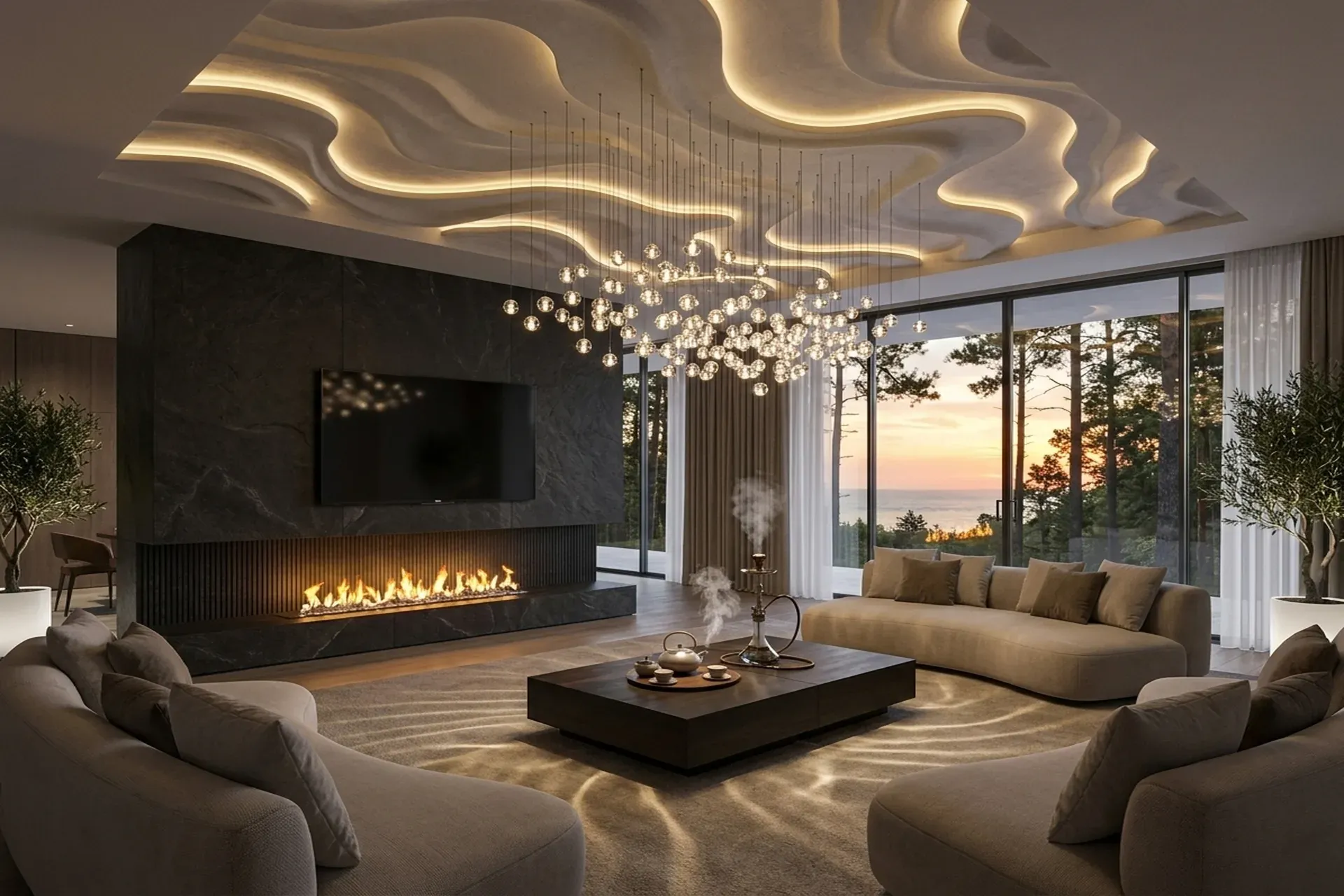
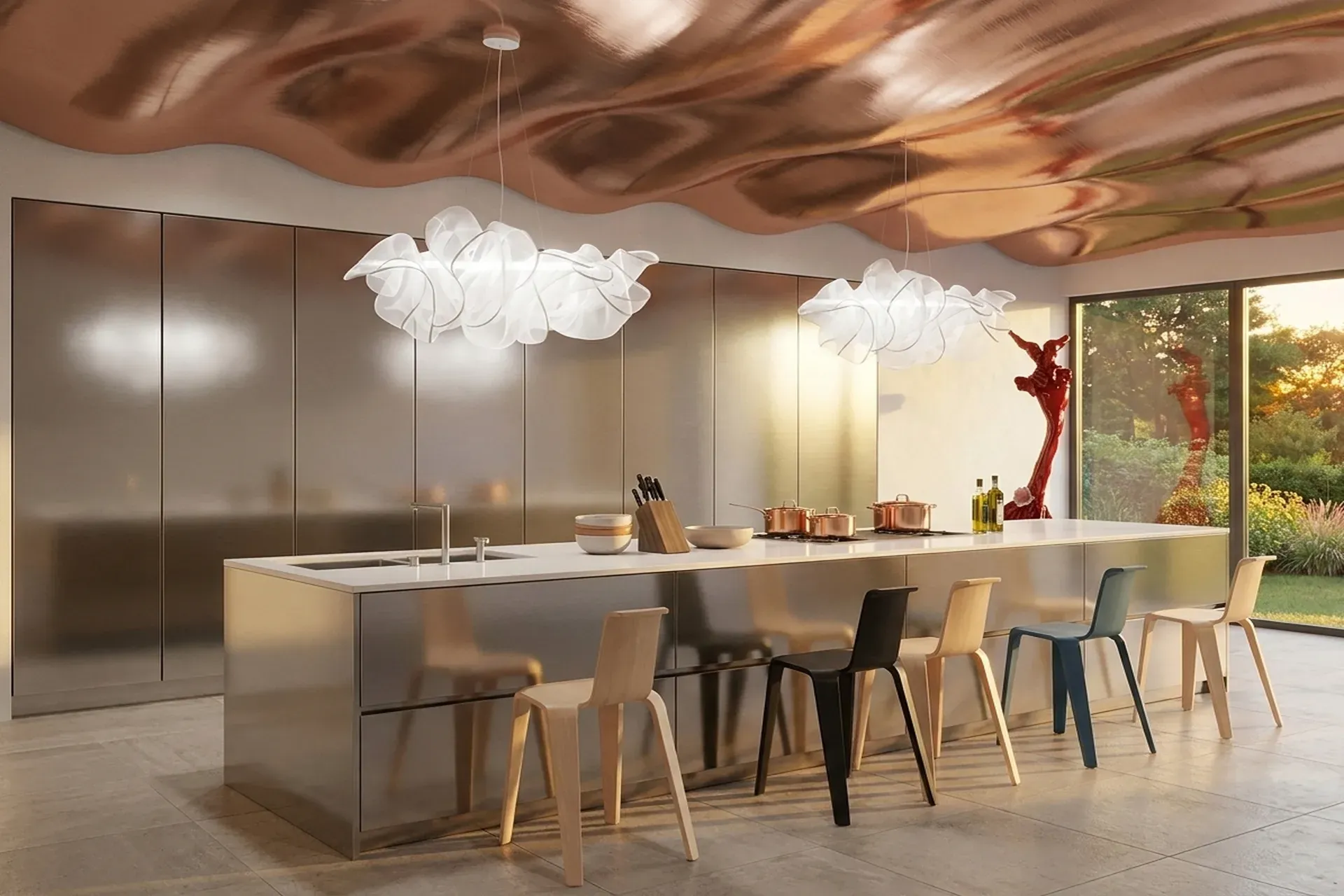
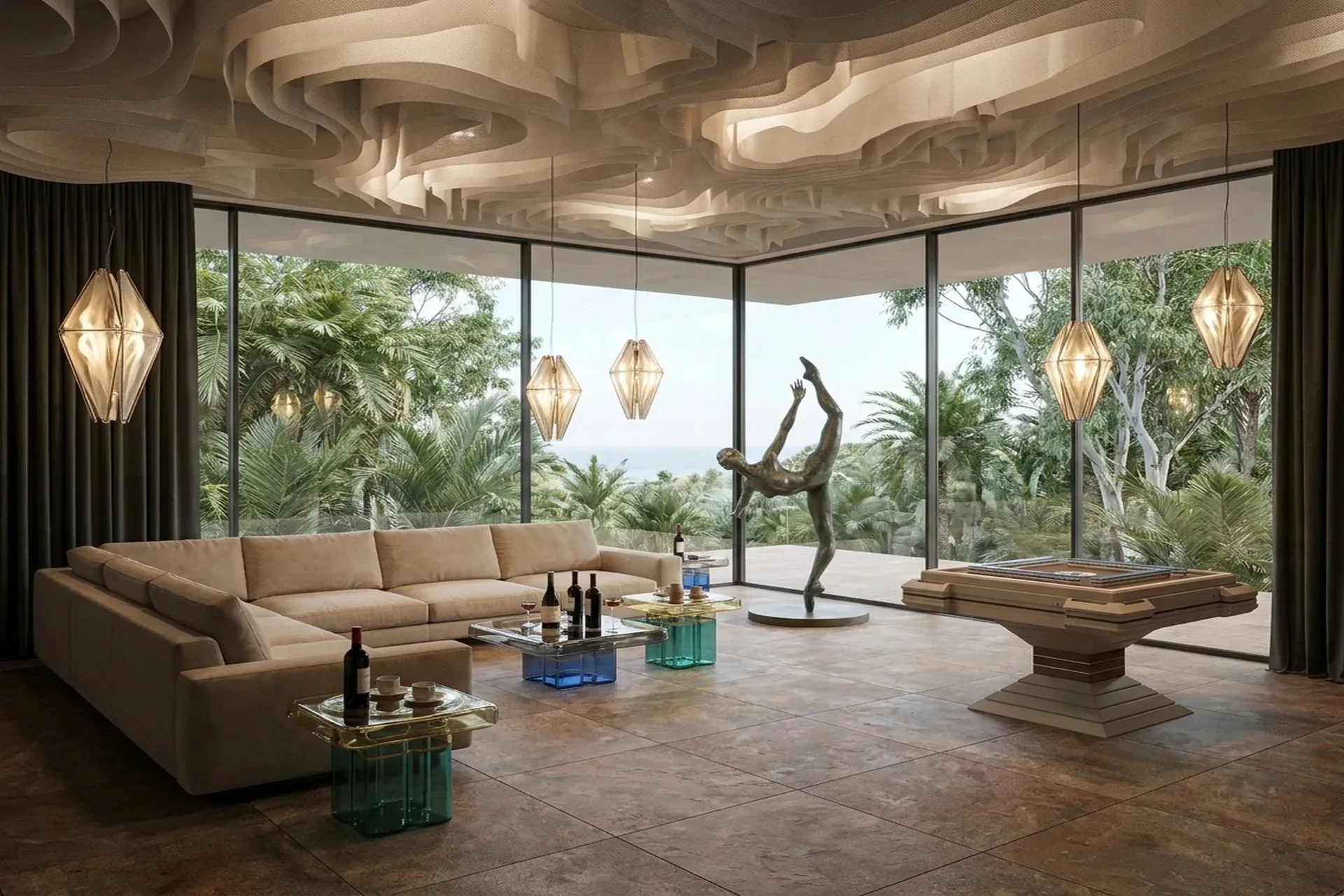
The principal floor is arranged as a single generous band of living and dining space, flooded by southern light through floor-to-ceiling glazing and opening directly onto a broad limestone terrace that steps down toward the pool. It is organically connected to the kitchen, which receives its own western terrace - a quieter, more domestic threshold where the rituals of morning coffee and evening meals unfold against the backdrop of the pine forest. Upper sleeping quarters, including the master suite with its private terrace commanding a spectacular sea panorama, are positioned to capture the southeast breeze. The lower level accommodates a leisure room and suite, separated enough from the family floors to offer genuine independence for guests or extended family.
Materials and climate
Girona limestone
We proposed a material palette that answers the Mediterranean climate honestly and without compromise. The facade is clad in Girona limestone, quarried within the region and selected for its warm honey tone that deepens at dusk. Internal floors continue with hydraulic encaustic tile in geometric patterns - a tradition rooted in Catalonian domestic architecture since the nineteenth century - providing thermal mass underfoot while connecting the house to its cultural landscape. All exterior metalwork and balustrade systems are fabricated in 316 stainless steel and marine-grade aluminium, both specified for their resistance to the coastal salt-air environment. Joinery visible in the interiors follows the same logic: warmth and precision, natural timber tones set against polished stone surfaces.
Style
Mediterranean Minimalism of the Costa Brava — a 1985 seaside villa recast as a quiet, light-driven retreat. The palette stays white, sand, terracotta, olive, and sea blue, but the grammar is pine-and-cypress: the garden's dark green kept as the only ornament against lime plaster and bare stone. The renovation disciplines itself to what the site already owned — the sea view, the coastal vegetation, the southern light — removing the decorative weight of the original build rather than adding a new one. The result is a house that reads as much through what it frames as through what it contains.
Bioclimatic strategy
Mediterranean passive cooling system
The Mediterranean passive cooling system employed here draws on centuries of Catalan building intelligence. Deep overhanging roof planes on the southern elevation shade the glazing through the hottest hours of the summer day - between June and September, when ambient temperatures regularly exceed 30 degrees Celsius - while allowing the low winter sun to penetrate fully and warm the limestone floors. Traditional persiana-style external louvred shutters on all principal windows allow fine-grained control of light and airflow without mechanical intervention. The plan is organised for cross-ventilation through opposing facades, drawing the prevailing northeast Tramontana breeze through the sleeping quarters and exhausting warm air through high-level openings above the living zone. Thermal mass in the floor and wall construction absorbs daytime heat and releases it gently through the cooler nights, keeping interior temperatures stable without air conditioning through most of the outdoor season.
Energy and sustainability
Our studio targeted a CEE energy rating of B-plus for this residence, aligning with current Spanish building code requirements and exceeding the regional baseline for coastal villas of this scale. The mechanical system is anchored by an aerothermal heat pump drawing on ambient outdoor air, supplemented by a rooftop solar photovoltaic array integrated flush into the upper terrace parapet to remain invisible from ground level. High-performance triple-glazed units with low-emissivity coatings are specified throughout, minimising heat gain in summer and heat loss across the mild Costa Brava winters, where temperatures rarely fall below 8 degrees Celsius. Rainwater harvesting feeds the landscape irrigation system, reducing mains water consumption across the seven-month outdoor season.
Landscape
Mediterranean planted terrace
The 3,300 sqm plot is organised around three distinct outdoor experiences. The southern Mediterranean planted terrace surrounds the pool with bougainvillea, rosemary, lavender, and wild olive - species chosen for their salt tolerance, low water demand, and the specific quality of colour they bring from April through October. The pool itself is lined with white stone and fitted with submerged lounging platforms, so that the boundary between water and rest dissolves entirely. The rear garden, shielded by mature pine, opens to a covered porche with a built-in barbecue zone - shaded, fragrant, and within three steps of the kitchen. A tennis court occupies the northern corner of the plot, completing a landscape that asks nothing of its owners except that they be present.
Luxury, here, is measured not in ornament but in the quality of light on limestone, and the silence between one terrace and the next.
¿Te interesa un proyecto similar?
Hablemos de tu visión y creemos algo extraordinario juntos.
Contáctanos